Fire wardens rest at the sharp end of work environment safety. When smoke remains in the stairwell or an alarm sets off mid-shift, individuals seek tranquil direction. A well-designed fire warden course does greater than pass on concept, it builds practical skills under pressure. Evaluation is where that proficiency is verified. The best training courses mix sensible situations, hands-on drills, and clear understanding checks lined up to nationwide devices of expertise such as PUAFER005 and PUAFER006.
This guide walks through exactly how reliable evaluations are structured, what assessors look for, and just how learners can prepare without uncertainty. It draws on the devices most organisations make use of in Australia to educate wardens and chief wardens, in addition to daily lessons from real discharges and exercises.
What the training is constructed on
Most fire warden training in Australia maps to 2 core devices within the Public Safety Training Package:

- PUAFER005 operate as component of an emergency situation control organisation. This device underpins fire warden training for floor wardens, area wardens, and deputy roles. Candidates learn to analyze the emergency plan, respond to different hazards, and carry out preliminary emptyings and communications. PUAFER006 lead an emergency control organisation. This is the chief warden course for those that collaborate the total reaction, quick wardens, liaise with emergency situation services, and make the tough get in touch with partial or complete evacuation.
Some service providers run a mixed warden course, after that include a chief warden stream for those handling management duties. The assessment needs to show the duties a learner will certainly keep back at the workplace. A tiny single-storey workplace requires various deepness to a healthcare facility or distribution centre. Excellent instructors tailor the scenarios accordingly.
The duty of analysis in competence
Fire warden performance is visible. Either a warden recognizes the appropriate egress path when a leave is endangered, or they funnel people right into a stumbling block. Assessment for that reason leans greatly on useful observation against clear criteria. The knowledge test matters, however it is the presentation under substitute conditions that validates readiness.
In technique, assessment is organized. Learners initially complete reading and pre-course jobs such as assessing the site emergency situation plan. During the program, they demonstrate distinct skills, like operating a fire indicator panel in isolate setting, and afterwards those abilities are worked out with each other in a timed scenario. The last task tests decision making with incomplete information, which mirrors actual incidents.
Practical abilities you will certainly be asked to demonstrate
Most fire warden programs structure the sensible around 3 collections: recall and interaction, discharge management, and devices checks. A normal PUAFER005 course will certainly call for a learner to do the adhering to throughout analysis:
- Use the center emergency situation caution and intercommunication system to provide clear directions. This consists of tone of voice, message web content, and brevity. In a drill, I listen for a crisp preliminary message that identifies the alert, place, and activity needed, adhered to by structured updates. Too many words develop confusion and block the system. Conduct an organized move. The assessor will enjoy whether you examine all spaces off a logical course, consisting of bathrooms, storerooms, and silent spaces. You will certainly be expected to recognize dangers on the route. In a current assessment for a manufacturing site, a prospect found an obstructed leave behind a pallet we had actually organized there for the situation, reported it, and redirected web traffic without drama. That is what we want to see. Manage vulnerable occupants. This can include wheelchair users, site visitors without induction, and personnel that freeze. The warden must ask for help, assign a buddy, and pick a haven location if traveling down the stairwell is risky or also slow. Operate a portable extinguisher safely within scope. Not every warden will certainly be assessed on online fire attack, yet many courses consist of a controlled simulator. The assessor seeks PASS strategy, correct selection for the gas course, evaluating the nozzle away from the fire, brushing up at the base, and hideaway if the fire is not knocked down quickly. We additionally evaluate judgment. Some fires need to not be struck at all, for example lithium battery fires beyond incipient phase, or anything entailing stimulated switchboards without appropriate extinguishing media and training. Account for individuals and record status. On the setting up area, the warden checks roll checklists or headcount systems, keeps in mind last well-known areas for missing people, and communicates concise sitreps to the chief warden. Obscure declarations like "I assume level 2 is clear" will not pass. We want "Level two west wing removed at 10:06, plant area unattainable because of smoke, specialist from Delta a/c unaccounted for, last seen near AHU 2."
For PUAFER006, which concentrates on leadership, analysis changes to technique and coordination. A chief warden candidate will be expected to:
- Interpret the fire sign panel and zone diagrams to triangulate the likely seat of the concern. When multiple detectors in various areas trigger, the assessor searches for how the prospect deals with the picture with available info from wardens. Decide in between localized management and modern discharge. Excellent decisions evaluate smoke spread, occupancy, time of day, weather, and the honesty of stairwells. A typical mistake is getting a complete website emptying prematurely, which can take vital courses far from fire crews and interrupt compartmentation strategies. Manage communications discipline. Just pertinent, time-stamped updates should review the radio. The chief warden sets that tone and polices radio clutter. Liaise with emergency solutions. A strong handover seems like a 30-second quick: occurrence kind, place, systems condition, individuals unaccounted for, dangers on website such as oxygen cylinders or high shelf storage space, and what has actually been done so far. I have actually seen the distinction that a tidy handover makes, specifically when crews show up mid-change of change and the site is loud and chaotic. Maintain situational awareness under stress and anxiety. The assessor will certainly include a curveball, such as a second alarm on a different floor or a medical emergency at the assembly point. The candidate must hand over and prevent getting dragged right into tactical tasks.
How expertise is examined and why it matters
Knowledge examinations in a fire warden course are not concerning rote memory. They validate the student can apply principles to their website. Still, anticipate to address multiple-choice and short-answer questions on the following:
- Emergency plan material and functions within the emergency control organisation. For PUAFER005 operate as part of an emergency control organisation, this consists of understanding wardens, chief warden, interactions officers, and first aiders, and exactly how these roles interact under AS 3745. Alarm states and tones. You need to identify alert and evacuation tones, recognize who authorizes evacuation, and what to say over the general public address. Fire courses and extinguisher option. A foam extinguisher on an invigorated electric fire is a traditional catch. Powder and carbon dioxide are common for electrical, water is for Course An only, and wet chemical for food preparation oils. Some carriers consist of pictures of labels and ask for identification. Behavioural hints and human factors. Crowd characteristics, confirmation prejudice, and the propensity for people to fetch individual things all affect emptying. We want wardens that expect these behaviours and established clear expectations. Legal and organisational needs. This includes broad fire warden requirements in the workplace: training regularity, documentation, incident reporting, and participation in drills. For complicated sites, expect a question on high-risk areas, permit to function systems, or shut down protocols.
The knowledge examination sets a base. If a candidate discovers a written inquiry however presents audio judgment in the scenario, trainers might check out the thinking vocally. Conversely, best scores indicate little if the candidate freezes when an alarm sounds.
What excellent assessment resembles for industry
A checklist can be mistreated. I have seen assessments that tick boxes without context, after that fail when tested by a genuine smoke occasion in a stairwell. Quality evaluation balances criteria with realism. Below is what that appears like:
- Scenarios mirror likely website threats. A skyscraper office take advantage of a stairwell emptying with substitute smoke behaviour and handicapped lift conditions. A storage facility requires emphasis above racking aisles, forklift web traffic, and splitting up of ignition sources. A medical facility has compartment evacuations, oxygen-rich environments, and patient motion policies. A one-size-fits-all warden course does not serve these differences. Time pressure is used sensibly. We include time bounds to mimic urgency, but we do not create no-win catches. The objective is to disclose exactly how a prospect prioritises, not to cause panic. Debriefs are straightforward. After a circumstance, the instructor and candidates go through what went well and what requires job. We look at communications records if videotaped and map actual path choices versus planned ones. Improvement sticks when connected to details moments. Documentation is meaningful. Assessors produce proof against each element and efficiency requirement of PUAFER005 or PUAFER006. This shields both the learner and the employer. Unclear remarks like "excellent communicator" are changed with specifics: "provided initial sharp message at 10:01 making use of EWS, supplied update at 10:04 with clear location and activity, avoided jargon."
Fire warden training demands and recency
Competence decomposes without technique. A lot of organisations establish a refresher course cycle of 12 months for emergency warden training, with a minimum of one full evacuation pierce every year per site. Complex facilities commonly run quarterly small-scale workouts and an annual multi-agency drill. Regulators and insurers like to see training records, participation listings, and action things tracked to closure.
New wardens ought to finish a fire warden course as quickly as they are selected. A common mistake is nominating a warden theoretically, then letting months pass prior to training. In that space, an actual event can occur with an unprepared individual putting on the warden vest. Do not let that occur. Induction for new staff need to cover alarm system tones, the setting up area, and the duty of wardens, yet that does not replace committed warden training.
Chief warden leadership and the additional lens of PUAFER006
The chief warden function sits at the crossway of planning, management, and control. The PUAFER006 course focuses on that. Assessment for a chief emergency warden surfaces abilities that are not noticeable in a quiet class. We try to find the ability to puncture noise, appoint wardens to zones, and maintain a mental model of the occurrence that updates with new info. Chief warden responsibilities consist of pre-incident jobs: making sure the emergency strategy is present, that drills are arranged, which communications equipment functions as planned. The analysis should consist of at the very least one planning element, such as modifying a warden lineup to cover high-risk durations like graveyard shift or college holidays.
Chief wardens additionally require credibility. In more than one drill, I have actually watched a chief fire warden regrettably deal with a radio for interest. The solution was straightforward, but it had to be imposed: radio method with given names, location initially, after that message, no cross talk. By the following exercise, the difference was stark.
Equipment and identification: obtaining the basics right
Identification conserves secs. A warden hat or vest that is consistent across a website helps individuals discover leadership in a group. Organisations commonly ask about fire warden hat colour and what colour helmet does a chief warden wear. The typical convention in Australia under AS 3745 is red for wardens, white for chief wardens, and yellow for interactions policemans, though some sites vary. The trick is to lock a standard in the emergency situation strategy, supply sufficient hats or vests, and make it noticeable in inductions.
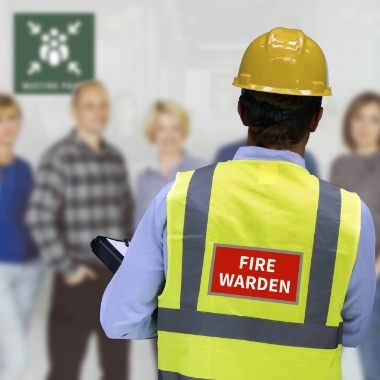
Beyond hats, radios require billed batteries, lanyards need telephone call signs, and evacuation packages need material checks. An assessor will certainly usually examine the kit: layout, a torch, high-visibility vests, keys for secured areas, a whistle for noisy environments, and contact listings. It is unexpected exactly how usually a package goes untouched for a year, then falls short under pressure.
How carriers run the analysis day
A regular day for PUAFER005 and PUAFER006 combined training might resemble this. Early morning covers understanding and micro-skills: emergency plan introduction, alarm systems, human behavior, extinguisher types, and communications emergency warden drills. After lunch, scenarios ramp up. Initially, a contained event on a single floor, then a multi-zone event with a complicating factor such as an obstructed egress or a harmed person at the setting up area.
Assessment runs constantly in the background. The assessor notes who takes campaign, that discolors, and how guidelines are phrased. For fairness, every student is provided a turn in the duty matched to their training stream. A fire warden prospect will be tasked with a sector move and an interactions activity. A chief warden prospect will certainly run occurrence control, designate wardens, and produce a spoken handover to the instructor serving as fire services.
The day ends with a debrief and feedback. Experienced students obtain statements of accomplishment for the relevant devices. Those that need even more practice may be issued partial completions with a prepare for reassessment.

Preparing for success
You do not require to become a fireman to pass a warden course, but you do require to approach it seriously. The most effective prep work is site-specific:
- Walk your emptying courses. Make use of a silent time to stroll the primary and second paths and look for pinch points like slim corridors, safety doors, or storage creep. Keep in mind heavy doors that may challenge mobility-impaired staff. Learn the website strategy. Know your alarm panel location, hydrant boosters, gas isolation factors, and risky areas. If you operate in a laboratory, recognize fume hood shutoffs and chemical shops. In a retail setup, focus on storeroom formats and loading docks. Practice the language. Practice a 10 to 15 second evacuation message that is calm and instruction. Write one for a sharp state and one for full evacuation. Brevity is a skill. Know your individuals. Understand who requires extra support and where they normally sit. Line managers can aid maintain this list current. Charge and check devices. Radios, extra batteries, emptying packages, and site visitor sign-in systems are only helpful if they work.
These actions do greater than assist you pass. They make you credible when it counts.
Edge cases and judgment calls
Textbook situations hardly ever endure contact with truth. A couple of complicated examples show the judgment assessors are seeking:
- Conflicting alarm systems. The panel shows an alarm on degree 4, yet the odor of smoke is more powerful in the cellar. A solid chief warden does not overlook the senses. They send off a warden to every area, verify with the panel isolate and recognize features if educated and accredited, and call fire solutions early with the conflicting information. People refusing to evacuate. In almost every drill, someone wishes to complete a task. A warden's role is persuasion, not enforcement, yet their message needs to be firm. If the person refuses, the warden notes the area, relocates others on, and notifies the chief warden to make sure that info can be handed to fire teams if the scenario escalates. External threats. A fire outside the building can push smoke into reduced levels through fresh air intakes. Blindly exiting to the nearby factor might subject individuals to smoke. A chief warden may hold residents in a safeguarded location or path to an additional setting up factor upwind, something that must be preplanned and written into the emergency plan. Fire combating attempts. A warden with an extinguisher can tear down a little trash can fire rapidly, yet powder residue can infect delicate equipment. We show the equilibrium between property security and security. The default is life safety first, with fire fighting only at incipient stage by trained persons, with a clear leave path. Mobility tools on staircases. Discharge chairs are remarkable yet need practice. An assessment should include a demonstration, however actual use in a circumstance depends upon site policy. Some websites choose refuge points and fire staff aid. Wardens must understand the picked approach and use it consistently.
How commonly to refresh and what to track
Emergency warden training is not a one-off occasion. For the majority of workplaces, an annual refresher, plus participation in drills, keeps currency. Risky atmospheres, such as aged treatment, health centers, and significant hazard centers, gain from six-monthly exercises. After each drill or incident, the chief fire warden should make certain a debrief document is produced with activities, owners, and due dates.
Track the complying with as a minimum: warden lineup and training days, drill days and involvement listings, problems located throughout moves, tools mistakes and correction days, and any type of modifications to flooring layouts that affect egress. If your organisation has multiple websites, assign an organizer to contrast lessons throughout them. A blocked departure in one warehouse is commonly a sign to check the others.
Titles, hats, and visible leadership
People ask about chief warden hat colour or chief fire warden hat colour due to the fact that visibility matters. Several websites use white hats for primary wardens and red for wardens, commonly with "Chief Warden" or "Warden" published front and back. Some swap hats for high-visibility vests with the same markings, which can be more functional inside. The chief warden hat is more than a prop. It lets emergency solutions immediately identify who to approach on arrival and assists staff discover management in a crowd.
Keep the signs constant across all websites in a firm. I as soon as viewed a multi-tenant building exercise where one lessee used environment-friendly headgears for wardens. Complication slowed the handover. A tiny solution, but revealing.
Choosing a supplier and training course fit
Not every warden training service provider is equivalent. Try to find trainers who inquire about your website in detail prior to the day, demand your emergency plan, and propose scenarios that match your threats. For a simple workplace, a half-day PUAFER005 course with site-specific walk-throughs might be excellent. For a school, intend a staged program: PUAFER005 for location wardens across structures, followed by a PUAFER006 course for a smaller group that will function as chief wardens and replacements. Chief fire warden training need to be secured in your interactions systems and assembly methods, not a generic lecture.
If your site has a specific risk profile, inform the company. Battery power storage, chilly areas with capacity for entrapment, or heritage stairwells that bottleneck can be created into the evaluation to surface the ideal decisions.
What success looks like after the course
An effective fire warden course generates greater than certifications. It leaves you with an operating emergency situation control organisation, a tighter strategy, and a group of wardens who recognize each other and trust their chief warden. In the weeks after training, good websites run a short drill to cement understanding, check that transforms from the debrief are executed, and close any actions. Wardens maintain their hats or vests close by, radios have a home and a charging turning, and site visitors obtain a clear induction on arrival.
When an alarm system rings suddenly a month later, you will certainly feel the difference. Wardens stand, move, and speak with purpose. The chief warden's first message is calm and concise. Individuals follow. That is real analysis. The documents issues, yet the actual test is https://hectorhieq988.iamarrows.com/emergency-warden-course-vs-fire-warden-course-secret-differences lived in the corridor, at the fire panel, and in the setting up area, under stress, when it counts.
Take your leadership in workplace safety to the next level with the nationally recognised PUAFER006 Chief Warden Training. Designed for Chief and Deputy Fire Wardens, this face-to-face 3-hour course teaches critical skills: coordinating evacuations, leading a warden team, making decisions under pressure, and liaising with emergency services. Course cost is generally AUD $130 per person for public sessions. Held in multiple locations including Brisbane CBD (Queen Street), North Hobart, Adelaide, and more across Queensland such as Gold Coast, Sunshine Coast, Toowoomba, Cairns, Ipswich, Logan, Chermside, etc.
If you’ve been appointed as a Chief or Deputy Fire Warden at your workplace, the PUAFER006 – Chief Warden Training is designed to give you the confidence and skills to take charge when it matters most. This nationally accredited course goes beyond the basics of emergency response, teaching you how to coordinate evacuations, lead and direct your warden team, make quick decisions under pressure, and effectively communicate with emergency services. Delivered face-to-face in just 3 hours, the training is practical, engaging, and focused on real-world workplace scenarios. You’ll walk away knowing exactly what to do when an emergency unfolds—and you’ll receive your certificate the same day you complete the course. With training available across Australia—including Brisbane CBD (Queen Street), North Hobart, Adelaide, Gold Coast, Sunshine Coast, Toowoomba, Cairns, Ipswich, Logan, Chermside and more—it’s easy to find a location near you. At just $130 per person, this course is an affordable way to make sure your workplace is compliant with safety requirements while also giving you peace of mind that you can step up and lead when it counts.